You spend a fortune on serums. You follow every skincare guru on social media. You layer products like a professional. But your skin still has a mind of its own — glowing one week, breaking out the next.
Sound familiar? You're not alone. And you're definitely not doing anything wrong.
What if the secret to great skin wasn't in your bathroom cabinet at all? What if it was hiding in plain sight — in your menstrual cycle?
The truth is, your hormones are running the show behind the scenes. And once you understand how they work, your entire approach to skincare will change forever.
Your Skin Has a Monthly Rhythm
Here's something most skincare brands won't tell you: your skin changes every single week, driven by the same hormones that control your period.
Estrogen, progesterone, and testosterone don't just affect your mood and energy — they directly impact your skin's texture, hydration, oil production, and clarity. Think of it like seasons for your face. Each week brings a different climate, and your skincare routine should shift accordingly.
The reason that miracle serum works one week and feels useless the next? It's not the product. It's your hormones changing the game.
Once you understand this rhythm, you stop fighting your skin and start working *with* it. That's where the real transformation begins.
The Four Phases of Your Skin
Your menstrual cycle has four distinct phases, and each one affects your skin in a completely different way. Let's break them down so you know exactly what to expect — and what to do about it.
Phase 1: Menstruation (Days 1-5) — The Reset
Your period is your skin's quiet phase. Hormone levels are at their lowest, which means:
- Skin feels **drier and more sensitive** than usual
- You might look a bit dull, tired, or washed out
- Inflammation from the previous week starts calming down
- Your skin barrier is at its weakest point
This is your body's way of hitting the reset button. Everything is winding down, conserving energy, and preparing for a fresh start.
- What to do: Go gentle. Really gentle. Use hydrating, soothing products — think hyaluronic acid, ceramides, and calming masks. Skip harsh exfoliants and active ingredients that could irritate your sensitive skin. This is your skin's recovery period — nourish it, don't challenge it.
- Pro tip: A nourishing overnight mask during this phase can work wonders for restoring that lost moisture.
Phase 2: Follicular Phase (Days 6-13) — The Glow-Up
Estrogen starts climbing steadily, and this is where the magic happens:
- Collagen production increases noticeably
- Skin becomes **more hydrated, plump, and bouncy**
- Your complexion starts to *radiate* from within
- Wound healing speeds up — even minor blemishes fade faster
This is the phase where people say, "Wow, your skin looks amazing today!" And you'll think it's the new moisturizer you tried. It's not. It's estrogen doing its beautiful thing.
- What to do: This is your golden window to try new products, book that facial, or exfoliate with AHAs or BHAs. Your skin is resilient, receptive, and forgiving right now. If you've been wanting to introduce retinol or vitamin C into your routine, this is the safest time to start.
Phase 3: Ovulation (Days 14-16) — Peak Glow
Estrogen hits its absolute peak. You're literally at your most radiant — and science backs this up:
- Skin is **firm, clear, and luminous**
- Pores appear visibly smaller
- You may notice a natural, healthy flush
- Lips appear fuller and skin looks plumper
Studies have even shown that people are perceived as more attractive during ovulation. Your skin is genuinely glowing from the inside out.
- What to do: Keep it simple and let your natural beauty shine. Light moisturizer, a good SPF, and maybe a touch of highlighter — though honestly, you probably won't need it. Your skin is doing all the heavy lifting on its own.
Phase 4: Luteal Phase (Days 17-28) — The Breakout Zone
Here's where things get tricky. Progesterone rises sharply. Testosterone joins the party. And your skin? It starts protesting:
- Oil production surges dramatically
- Pores get clogged more easily
- Breakouts show up — usually along the chin, jawline, and lower cheeks
- Skin may feel puffy, warm, or inflamed
- Existing scars and dark spots may appear more pronounced
This is the phase that makes most women frustrated with their skin. But knowing it's coming gives you the power to prepare.
- What to do: Switch to oil-free, non-comedogenic products. Introduce gentle salicylic acid or niacinamide to keep pores clear. Double-cleanse every evening to remove excess oil and buildup. Use clay masks 1-2 times per week. And most importantly — resist the urge to pick at your skin. It only makes things worse and can cause scarring.
- Pro tip: Spot-treat emerging blemishes with benzoyl peroxide or tea tree oil before they fully surface.
The Hormone-Skin Connection at a Glance
| Cycle Phase | Dominant Hormone | Skin Behaviour | Skincare Strategy |
|---|---|---|---|
| Menstruation | Low everything | Dry, sensitive, dull | Hydrate, soothe, protect |
| Follicular | Rising estrogen | Improving, hydrated | Exfoliate, try new products |
| Ovulation | Peak estrogen | Glowing, clear, firm | Keep it minimal, SPF |
| Luteal | High progesterone | Oily, breakout-prone | Oil control, gentle acids |
Why Most Skincare Advice Fails
Here's the uncomfortable truth that the beauty industry doesn't want you to hear: most skincare routines assume your skin stays the same every day. They don't account for the hormonal rollercoaster happening beneath the surface.
That's why a product works brilliantly one week and does absolutely nothing the next. It's not the product's fault. It's not your fault either. It's simply a matter of timing.
When you use a heavy moisturizer during your luteal phase (when your skin is already producing excess oil), you're adding fuel to the fire. When you exfoliate aggressively during menstruation (when your skin barrier is compromised), you're causing more damage than good.
The solution isn't buying more products. It's using the right products at the right time.
The best skincare routine is the one that adapts to your body — not the other way around.
Foods That Feed Your Glow
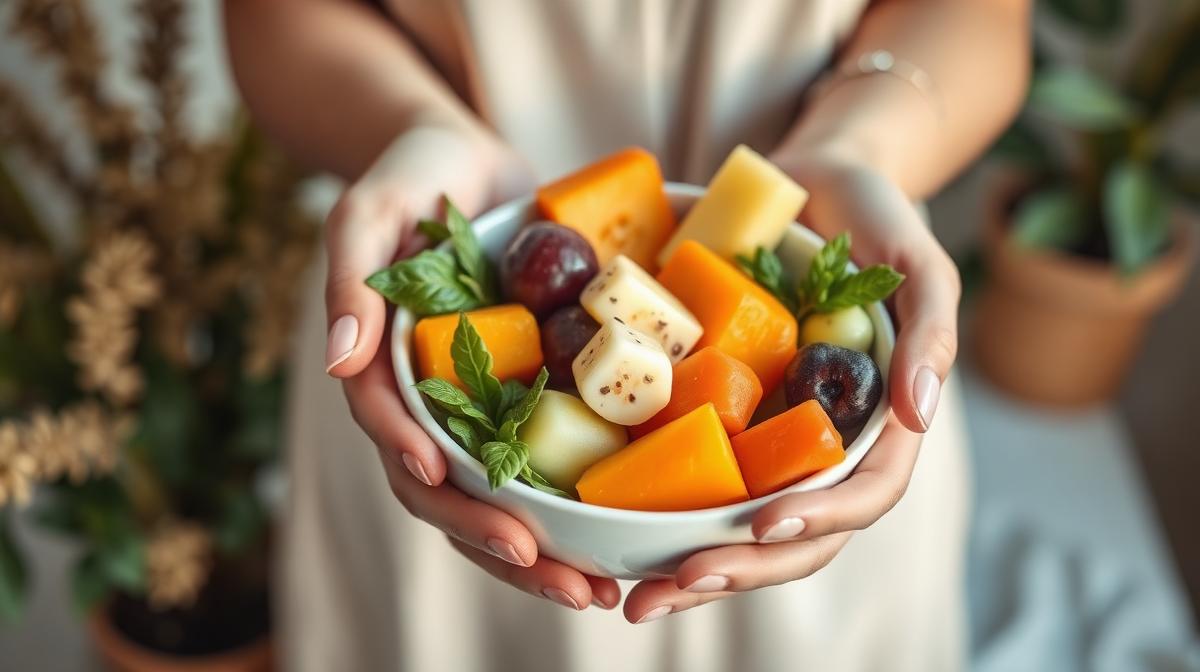
Great skin isn't built with products alone. What you eat matters enormously, especially when you sync your nutrition with your cycle phases:
- During menstruation: Iron-rich foods like spinach, lentils, and red meat replenish what your body is losing. Dark chocolate (yes, really!) provides magnesium that fights inflammation and boosts your mood. Warm soups and stews are comforting and easy to digest.
- During the follicular phase: Load up on fermented foods like yogurt and kimchi, leafy greens packed with folate, and lean proteins. These support the estrogen surge that's giving you that gorgeous glow. Sprouted grains and fresh vegetables are your allies here.
- Around ovulation: Antioxidant-rich berries, citrus fruits bursting with vitamin C, and foods high in vitamin E (like almonds and avocados) protect your skin at its peak. Raw vegetables and light, fiber-rich meals keep everything balanced.
- During the luteal phase: Anti-inflammatory foods are your best friends — turmeric lattes, wild salmon, walnuts, and green tea. Cruciferous vegetables like broccoli and cauliflower help your liver process excess hormones. Cut back on sugar, dairy, and processed foods that amplify breakouts and inflammation.
The Stress Factor
We can't have an honest conversation about skin without talking about cortisol — the stress hormone that wreaks havoc on your complexion.
When you're stressed, cortisol spikes, which:
- Increases oil production dramatically
- Breaks down collagen and elastin (hello, premature aging)
- Triggers inflammatory skin conditions like eczema and psoriasis
- Makes existing breakouts angrier and slower to heal
- Impairs your skin barrier function
And here's the real kicker: stress also disrupts your menstrual cycle, throwing off the very hormones that control your skin. It's a vicious cycle — stress causes bad skin, bad skin causes more stress, and the cycle repeats.
Breaking this loop requires more than skincare products. Regular movement, quality sleep, deep breathing, and moments of genuine relaxation aren't luxury — they're essential skin care.
Track Your Cycle, Transform Your Skin
The women who have genuinely great skin aren't necessarily using the most expensive products or following complicated 12-step routines. They understand their bodies. They know which week they'll glow and which week they need to be more careful.
Start tracking your cycle alongside your skin. Note when breakouts appear, when your skin feels dry, when it looks its absolute best. Keep a simple journal or use a tracking app. Within 2-3 cycles, you'll see patterns that no dermatologist could tell you — because they're unique to *your* body.
This is personalized skincare in its truest form. No algorithm, no influencer, no brand can replicate what your own body data reveals.
The Real Secret
The secret to glowing skin isn't a product. It's not a 12-step routine. It's not even genetics (though that helps).
- The real secret is understanding that your skin is a living reflection of your hormonal health. When you work with your cycle instead of against it, everything changes — your skin, your confidence, and your relationship with your own body.
You stop blaming yourself for breakouts. You stop wasting money on products that "don't work." You start seeing your skin as a messenger, not an enemy. And that shift in perspective? It's more powerful than any serum on the market.
So the next time someone asks about your skincare routine, you can smile and say: "I just listen to my body."
- Because the best glow comes from the inside out.